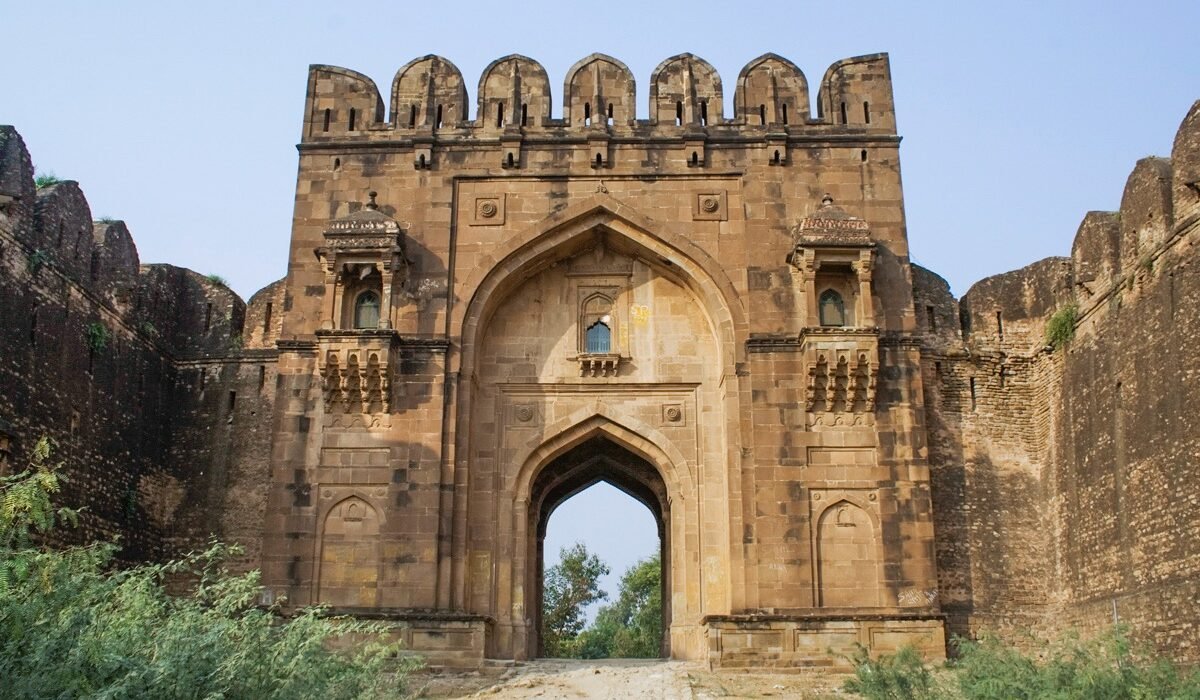
Rohtas Fort: The Impregnable Fortress That Defines Jhelum’s Heritage
Standing majestically on the banks of the Kahan River, Rohtas Fort emerges from the landscape like a giant guardian watching over the Salt Range hills. This 16th-century marvel, located just 18 kilometers northwest of Jhelum city, is not just another historical monument; it’s a testament to military genius, architectural brilliance, and the enduring spirit of our region. As Pakistan’s first UNESCO World Heritage Site and one of the finest examples of early Muslim military architecture in the subcontinent, Rohtas Fort represents the pinnacle of strategic fortification that has captivated visitors for over four centuries.
Whether you’re a history enthusiast, architecture lover, or simply seeking an unforgettable day trip from Jhelum, this comprehensive guide will unveil the secrets of this magnificent fortress and help you plan the perfect visit to one of Pakistan’s most treasured landmarks.
The Historical Tapestry: Sher Shah Suri’s Master Creation
The story of Rohtas Fort begins in 1541 when the formidable Afghan ruler Sher Shah Suri ordered its construction. Having recently defeated the Mughal Emperor Humayun and established the Sur Empire, Sher Shah needed a strategic stronghold to control the turbulent Potohar region and prevent any Mughal resurgence. The location was chosen with military precision positioned on the Grand Trunk Road, the fort could monitor and control the vital trade routes connecting Central Asia with the Indian subcontinent.
The name “Rohtas” itself carries deep significance, derived from “Rohtasgarh” in Bihar, India, where Sher Shah had previously established his power. By naming his new fortress after his earlier stronghold, he symbolically extended his authority across his expanding empire.
The Engineering Marvel Behind the Fort
What makes Rohtas Fort extraordinary is not just its scale but the speed of its construction. Completed in just eight years (1541-1548), this massive undertaking required the labor of thousands of workers and craftsmen. Sher Shah personally supervised the construction, ensuring that every aspect met his exacting military standards. The fort was designed to be completely self-sufficient, capable of withstanding prolonged sieges while maintaining a garrison of several thousand soldiers.
Interestingly, despite its formidable appearance and strategic importance, Rohtas Fort never faced a major siege during Sher Shah’s lifetime. Its very presence served as a deterrent, demonstrating the Sur Empire’s military might and engineering capabilities to potential adversaries.
UNESCO World Heritage Recognition: A Global Treasure
In 1997, UNESCO inscribed Rohtas Fort on the World Heritage List, recognizing its outstanding universal value and exceptional architectural significance. The designation praised the fort as “an exceptional example of early Muslim military architecture in Central and South Asia” and highlighted its role in demonstrating the evolution of fortification techniques in the region.
The UNESCO recognition brought international attention to this Pakistani treasure, establishing it as a site of global importance. The inscription criteria emphasized the fort’s architectural innovation, historical significance, and its representation of a crucial period in South Asian history when the Sur dynasty briefly challenged Mughal supremacy.
Conservation Efforts and Challenges
With UNESCO status comes responsibility. The Pakistani government, in collaboration with international conservation experts, has undertaken various preservation projects to maintain the fort’s structural integrity. These efforts include stabilizing ancient walls, preserving original architectural details, and implementing visitor management systems to balance accessibility with conservation needs.
Architectural Splendor: Deconstructing a Military Masterpiece
Rohtas Fort stands as a textbook example of 16th-century military architecture, covering an impressive area of 70 hectares. The fort’s irregular triangular layout follows the natural contours of the land, maximizing defensive advantages while minimizing construction costs. The massive walls, constructed from local sandstone and strengthened with lime mortar, stretch for approximately 4 kilometers in total length.
The Magnificent Bastions: Guardians of Stone
The fort’s defensive system revolves around its 68 semi-circular bastions, each strategically positioned to provide overlapping fields of fire. These bastions represent a sophisticated understanding of ballistics and siege warfare. The semi-circular design deflected cannon balls more effectively than traditional square towers, while their massive thickness, some reaching up to 12.5 meters, could withstand the most powerful artillery of the era.
Each bastion was designed with multiple gun positions, allowing defenders to concentrate firepower on attacking forces. The bastions also served as living quarters for soldiers, with internal chambers providing protection during sieges. Walking along the ramparts today, visitors can still observe the strategic placement of these defensive structures and appreciate the mathematical precision behind their positioning.
The Twelve Gates: Portals to History
Rohtas Fort’s twelve gates each tell a unique story and demonstrate different aspects of Mughal and Afghan architectural influence. These gates were not merely entrances but complex defensive systems designed to channel and control access to the fort.
Sohail Gate: The Grand Entrance
The Sohail Gate, also known as the Delhi Gate, serves as the fort’s main entrance and represents the pinnacle of Sur dynasty architectural achievement. This imposing structure features intricate stone carvings, geometric patterns, and calligraphic inscriptions that blend Afghan and local artistic traditions. The gate’s design includes a bent entrance passage, forcing visitors to make several turns before entering the fort, a defensive feature that prevented enemy cavalry charges and allowed defenders to observe approaching visitors.
The architectural details of Sohail Gate include ornate brackets supporting the upper structure, decorative medallions, and inscriptions in Persian and Arabic that record the fort’s construction date and Sher Shah’s achievements.
Kabuli Gate: The Northwestern Sentinel
Located on the fort’s northwestern side, Kabuli Gate demonstrates the practical military architecture that characterized Rohtas Fort. This gate controlled access from the direction of Afghanistan and Central Asia, reflecting its strategic importance for monitoring potential threats from the north. The gate’s sturdy construction and minimal decoration emphasize function over form, though it still displays the characteristic Sur dynasty architectural elements.
Shishi Gate: The Elegant Portal
Shishi Gate stands out for its relatively refined architectural treatment, featuring more decorative elements than some of the purely military gates. The name “Shishi” refers to the glass or mirror work that once adorned the gate, though time and weather have erased most of these delicate decorations. The gate’s design demonstrates how even functional military structures could incorporate aesthetic elements without compromising defensive capabilities.
The Underground Marvel: Bari Baoli Well System
Among Rohtas Fort’s most remarkable features is the Bari Baoli, an underground well and water storage system that showcases the engineering genius of 16th-century builders. This subterranean marvel extends deep into the earth, consisting of a stepped well surrounded by underground chambers and galleries.
Engineering Innovation Underground
The Bari Baoli represents more than just a water source, it’s a complete underground ecosystem designed to sustain the fort’s population during extended sieges. The well’s stepped construction allows access to water even when levels drop during dry seasons, while the surrounding chambers provided cool storage space for provisions and shelter for non-combatants during attacks.
The architectural design of the Bari Baoli demonstrates sophisticated understanding of groundwater dynamics and structural engineering. The well’s walls feature carefully calculated curves that distribute water pressure evenly, while the stepped design prevents erosion and provides safe access for water collection.
Visitors today can descend into this underground wonder and experience the cool, quiet atmosphere that provided relief to fort residents centuries ago. The acoustic properties of the well are particularly fascinating, whispers carry clearly between different levels, creating an almost mystical experience for modern visitors.
Journey to Rohtas: Getting There from Jhelum
Reaching Rohtas Fort from Jhelum city is straightforward and offers scenic views of the Punjab countryside. The fort is located approximately 18 kilometers northwest of Jhelum city and 7 kilometers from the town of Dina, making it an ideal day trip destination.
Transportation Options
Several transportation options are available for reaching the fort. Private car or taxi remains the most convenient choice, offering flexibility in timing and the ability to explore the surrounding area. The journey typically takes 30-45 minutes from Jhelum city center, depending on traffic conditions and the chosen route.
For budget-conscious travelers, local buses and wagons operate regularly between Jhelum and Dina, from where you can hire a rickshaw or taxi for the remaining 7 kilometers to the fort. This option provides an authentic local travel experience and opportunities to interact with residents of the region.
The Scenic Route
The drive to Rohtas Fort takes you through typical Punjabi countryside, with agricultural fields, small villages, and glimpses of the Salt Range hills in the distance. The road passes through Dina, a historic town that served as an important station on the Grand Trunk Road. This route itself has historical significance, as it follows portions of the ancient trade route that made Rohtas Fort’s location so strategically important.
Planning Your Visit: Timing and Practical Considerations
Best Time to Visit
The optimal time for visiting Rohtas Fort is during the cooler months from October through March. During this period, temperatures are comfortable for exploring the extensive fort complex, and the clear skies provide excellent conditions for photography. The winter months (December-February) offer particularly pleasant conditions, with crisp air and brilliant sunshine that highlights the fort’s architectural details.
Spring visits (March-April) coincide with blooming vegetation around the fort, creating beautiful natural backdrops for photographs. However, summer visits (May-September) should be planned carefully, with early morning or late afternoon timing to avoid the intense midday heat.
Entry Fees and Timings
Rohtas Fort maintains modest entry fees that support conservation efforts and site maintenance. Pakistani nationals typically pay a nominal fee, while international visitors pay slightly higher rates. The fort is generally open from sunrise to sunset, allowing visitors to experience the changing light conditions that dramatically transform the fort’s appearance throughout the day.
Group discounts are often available for educational institutions and organized tours. It’s advisable to confirm current fees and timings before your visit, as these can change based on conservation activities or special events.
Facilities and Amenities
Basic visitor facilities are available at the fort, including restroom facilities and a small information center where you can learn about the site’s history and significance. Local vendors sometimes operate near the entrance, offering refreshments and souvenirs. However, it’s recommended to bring water and snacks, especially during longer visits or in hot weather.
Photography Paradise: Capturing Rohtas Fort
Rohtas Fort offers exceptional photography opportunities for both amateur and professional photographers. The combination of massive stone architecture, dramatic landscape settings, and changing light conditions throughout the day creates endless possibilities for stunning images.
Golden Hour Magic
The golden hours; early morning just after sunrise and late afternoon before sunset, provide the most spectacular lighting conditions for photographing the fort. During these times, the warm light enhances the natural color of the sandstone walls and creates dramatic shadows that emphasize the fort’s architectural details.
The morning light is particularly beautiful for capturing the fort’s eastern facades, while evening light works wonderfully for western-facing walls and the dramatic silhouettes of bastions against the sky.
Architectural Details and Compositions
The fort’s architectural elements provide numerous opportunities for detail photography. The intricate carvings on gates, the geometric patterns in stonework, and the massive scale of the bastions all offer compelling subjects. Wide-angle lenses are essential for capturing the fort’s immense scale, while telephoto lenses help isolate architectural details and compress perspective for dramatic effect.
Don’t overlook the underground Bari Baoli for unique photographic opportunities. The play of light and shadow in the well’s depths creates mysterious and atmospheric images that contrast beautifully with the fortress’s exterior grandeur.
Rohtas Fort and Jhelum’s Cultural Identity
For the people of Jhelum, Rohtas Fort represents far more than a tourist attraction, it’s a cornerstone of regional identity and a source of immense pride. The fort connects modern Jhelum to its illustrious past, demonstrating that this region has always played a crucial role in South Asian history.
Educational and Cultural Significance
Local schools regularly organize educational trips to Rohtas Fort, using the site to teach students about their heritage, architectural principles, and historical events. The fort serves as an outdoor classroom where abstract historical concepts become tangible and engaging.
The presence of a UNESCO World Heritage Site in the district has elevated Jhelum’s profile nationally and internationally. It has fostered a sense of responsibility among local communities to preserve and promote their cultural heritage while welcoming visitors from around the world.
Economic Impact and Community Pride
Tourism generated by Rohtas Fort contributes significantly to the local economy, supporting guides, transporters, vendors, and hospitality services. This economic benefit reinforces the community’s commitment to conservation and creates incentives for maintaining the site’s integrity.
The fort has also inspired local artisans and craftsmen, who create replicas, models, and artistic interpretations of the fortress. These products not only provide income but also help spread awareness of Rohtas Fort’s significance to broader audiences.
Conclusion: A Timeless Journey Awaits
Rohtas Fort stands as an eternal testament to human ambition, architectural mastery, and strategic brilliance. This magnificent fortress, rising from the Punjab plains like a stone giant, offers visitors far more than a glimpse into the past, it provides a profound connection to the forces that shaped our region and our nation.
As you walk through the massive gates, climb the ancient bastions, and descend into the mysterious depths of the Bari Baoli, you’re not just exploring ruins but experiencing a living piece of history. Every stone tells a story of Sher Shah Suri’s vision, of craftsmen’s dedication, and of centuries of guardianship by the people of Jhelum.
For residents of Jhelum district, Rohtas Fort is a constant reminder of our region’s importance in shaping the subcontinent’s destiny. For visitors from afar, it offers an unparalleled opportunity to understand the sophisticated military architecture and cultural synthesis that characterized medieval South Asia.
Plan your visit to Rohtas Fort not just as a tourist destination but as a pilgrimage to one of humanity’s great achievements. Whether you come for the history, the architecture, the photography opportunities, or simply the profound experience of standing where giants once walked, Rohtas Fort will reward you with memories that last a lifetime and a deeper appreciation for the rich heritage that defines Jhelum and Pakistan.
The fortress awaits your discovery, just as it has awaited travelers, scholars, and dreamers for nearly five centuries. Come, explore, and become part of the continuing story of Rohtas Fort, where history lives, legends endure, and the spirit of human achievement stands eternal against the Punjab sky.