The Hidden Wonder of Jhelum District: A Complete Guide to Khewra Salt Mines
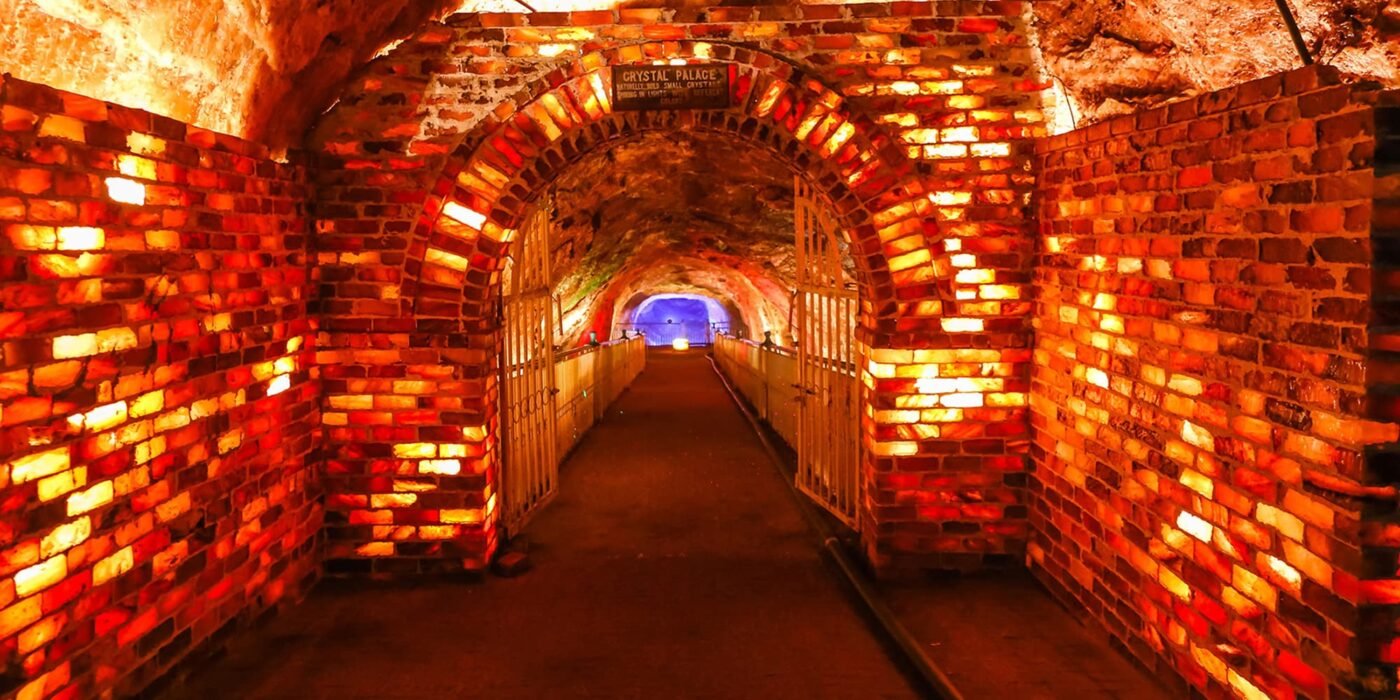
Deep beneath the rolling hills of Jhelum District lies one of Pakistan’s most extraordinary treasures; the magnificent Khewra Salt Mines. This subterranean marvel, stretching for miles underground, represents not just a geological wonder but a testament to centuries of human ingenuity and natural beauty. As the world’s second-largest salt mine and Pakistan’s oldest operating salt mine, Khewra attracts over 200,000 visitors annually, making it one of the country’s premier tourist destinations.
Located in the picturesque Pind Dadan Khan tehsil of Jhelum District, these ancient mines offer visitors an unforgettable journey into the earth’s depths, where crystalline formations create an otherworldly landscape of pink and white corridors. From therapeutic salt chambers to architectural marvels carved entirely from salt bricks, Khewra Salt Mines present a unique blend of natural wonder, historical significance, and modern tourism infrastructure that captivates visitors from around the globe.
A Journey Through Time: The Rich History of Khewra Salt Mines
Ancient Discovery by Alexander’s Army
The story of Khewra Salt Mines begins over 2,300 years ago with one of history’s most legendary figures. According to historical accounts, the salt deposits at Khewra were first discovered in 320 BC by the troops of Alexander the Great during their campaign through the Indian subcontinent. The discovery occurred quite by accident when Alexander’s cavalry horses began licking the salty rocks in the area, drawing attention to the vast mineral wealth lying beneath the surface.
This serendipitous discovery would eventually lead to the establishment of one of the world’s most significant salt mining operations. The ancient Greek historians documented this find, marking it as one of the earliest recorded instances of salt mining in the region that would later become Pakistan.
Development During the Mughal Era
While the salt deposits were discovered in ancient times, systematic mining operations didn’t begin until the Mughal period. The Mughal emperors, recognizing the immense economic potential of these salt reserves, established formal mining operations in the 16th century. Under Mughal rule, the mines became a significant source of revenue for the empire, with salt being traded across the vast Mughal territories and beyond.
The Mughals introduced sophisticated mining techniques for their time, including the construction of underground chambers and the development of extraction methods that would form the foundation of modern mining operations at Khewra. The imperial administration established trade routes that connected Khewra salt to markets as far away as Central Asia and the Middle East.
British Colonial Period and Modern Development
During the British colonial period, the mines underwent significant modernization. The British administration, under the guidance of Dr. H. Warth, a mining engineer, revolutionized the mining operations in 1872. They introduced the “room and pillar” method of mining, which not only increased efficiency but also ensured the structural integrity of the underground chambers – a method still used today.
The British also constructed the narrow-gauge railway system within the mines, facilitating the transportation of salt and eventually evolving into the tourist train that visitors enjoy today. This period marked the transformation of Khewra from a traditional mining operation into a more systematized industrial venture.
Fascinating Facts About Khewra Salt Mines
The Khewra Salt Mines hold numerous impressive records and fascinating characteristics that set them apart as a global wonder:
- Global Ranking: Khewra is the world’s second-largest salt mine by volume, surpassed only by the Goderich Salt Mine in Ontario, Canada
- Annual Production: The mines produce approximately 385,000 tons of salt annually, contributing significantly to Pakistan’s economy
- Tourist Numbers: Over 200,000 domestic and international tourists visit the mines each year, making it one of Pakistan’s most popular tourist attractions
- Underground Extent: The mining tunnels extend over 40 kilometers underground, with 18 levels of mining operations
- Salt Reserves: Geological surveys estimate that the mines contain over 600 million tons of salt reserves
- Employment: The mines directly employ over 1,700 people, supporting thousands of families in the region
- Historical Significance: The mines have been operational for over 700 years, making them one of the oldest continuously operating industrial sites in South Asia
Underground Marvels: What to See Inside Khewra Salt Mines
The Grand Assembly Hall
One of the most impressive features visitors encounter is the magnificent Assembly Hall, a vast underground chamber that showcases the engineering prowess of the mining operations. This expansive hall, carved entirely from solid salt formations, can accommodate hundreds of visitors and serves as a gathering point for guided tours. The hall’s walls shimmer with natural salt crystals, creating an ethereal atmosphere enhanced by carefully placed lighting systems.
The Assembly Hall also houses displays of mining equipment, historical artifacts, and informational exhibits that tell the story of the mines’ development over the centuries. Visitors often describe the experience of standing in this underground cathedral as both humbling and awe-inspiring.
Spectacular Crystal Formations
Throughout the mines, visitors encounter breathtaking natural crystal formations that have developed over millions of years. These crystalline structures, ranging in color from pure white to deep pink, create natural sculptures that rival any man-made artwork. The formations include delicate salt flowers, massive salt domes, and intricate crystal gardens that sparkle under the mine’s illumination system.
The most photographed formations include the “Salt Bridge,” a natural arch formation, and the “Crystal Garden,” where delicate salt formations resemble flowers and plants. These geological wonders provide excellent opportunities for photography and demonstrate the incredible artistry of natural processes.
The Salt Brick Mosque
Perhaps one of the most unique attractions within the mines is the beautifully constructed mosque made entirely from salt bricks. This architectural marvel demonstrates both the versatility of salt as a building material and the artistic capabilities of local craftsmen. The mosque, complete with intricate geometric patterns and Islamic calligraphy carved into salt walls, serves as a functional place of worship for mine workers and visiting pilgrims.
The mosque’s construction required specialized techniques to ensure structural stability while maintaining the aesthetic beauty of traditional Islamic architecture. Visitors of all faiths marvel at this unique fusion of natural resources, religious devotion, and architectural skill.
The Underground Salt Lake
Deep within the mines lies a serene underground salt lake, fed by natural springs that dissolve surrounding salt deposits. This perfectly still body of water creates mirror-like reflections of the salt formations above, doubling the visual impact of the surrounding crystalline structures. The lake’s high salt content makes it impossible for swimmers to sink, similar to the Dead Sea experience.
The salt lake serves both practical and aesthetic purposes, helping to maintain humidity levels within the mines while providing visitors with one of the most photogenic spots in the entire complex. The interplay of light, water, and salt creates an almost mystical atmosphere that many visitors describe as transformative.
Therapeutic Salt Rooms
The mines feature specially designed therapeutic salt rooms where visitors can experience the health benefits associated with salt therapy, also known as halotherapy. These chambers maintain specific temperature and humidity levels while releasing microscopic salt particles into the air. Medical practitioners and wellness enthusiasts believe that breathing in this salt-enriched air can help alleviate respiratory conditions, skin problems, and stress-related ailments.
The therapeutic rooms provide comfortable seating areas where visitors can relax and breathe in the beneficial atmosphere. Many tour packages include scheduled time in these wellness chambers, making Khewra not just a tourist destination but also a health retreat.
The Pink Himalayan Salt Industry: From Mine to Market
The Premium Product
Khewra Salt Mines are the primary source of the world-famous Pink Himalayan Salt, a premium product that has gained international recognition for its supposed health benefits and distinctive appearance. This pink-hued salt gets its color from trace minerals, particularly iron oxide, that became embedded in the salt deposits millions of years ago when the ancient Tethys Sea evaporated.
The mining process for Pink Himalayan Salt involves careful extraction to preserve the natural mineral content and color variations. Workers use traditional hand-mining techniques for the highest quality salt, ensuring that the final product maintains its distinctive characteristics that command premium prices in international markets.
Economic Impact and Global Reach
The Pink Himalayan Salt industry has become a significant economic driver for Jhelum District and Pakistan as a whole. The salt is exported to over 30 countries worldwide, with major markets in North America, Europe, and the Middle East. This global reach has brought international attention to the region and established Pakistan as a major player in the premium salt market.
Local communities benefit from this industry through direct employment in mining operations, processing facilities, and support services. Additionally, the growth of the Pink Himalayan Salt brand has contributed to increased tourism, creating a positive economic cycle that benefits the entire region.
Getting There: How to Reach Khewra Salt Mines from Jhelum
Location and Accessibility
Khewra Salt Mines are strategically located in the Pind Dadan Khan tehsil of Jhelum District, approximately 160 kilometers from Islamabad and about 30 kilometers from the city of Jhelum. The mines’ location along the historic Grand Trunk Road makes them easily accessible by multiple modes of transportation.
Transportation Options
By Car: The most convenient way to reach Khewra is by private vehicle or taxi. From Jhelum city, take the GT Road towards Pind Dadan Khan. The journey takes approximately 45 minutes to 1 hour, depending on traffic conditions. The road is well-maintained, and clear signage directs visitors to the mine entrance.
By Bus: Regular bus services operate between Jhelum and Pind Dadan Khan, with stops near the mine entrance. Local buses and wagons provide affordable transportation options for budget-conscious travelers. The bus journey typically takes 1-1.5 hours from Jhelum city center.
By Train: The nearest railway station is Pind Dadan Khan, which connects to major cities including Lahore, Rawalpindi, and Karachi. From the railway station, local transport options including auto-rickshaws and taxis are available to cover the final few kilometers to the mine entrance.
Organized Tours: Many tour operators in major Pakistani cities offer day trips and multi-day packages that include transportation, guided tours, and meals. These packages are particularly popular with international tourists and provide hassle-free access to the mines.
Visitor Information: Timings, Fees, and Practical Details
Operating Hours and Seasonal Considerations
Khewra Salt Mines are open to tourists year-round, with operating hours typically from 9:00 AM to 5:00 PM. However, these timings may vary during Islamic holidays and special events. The mines maintain comfortable temperatures year-round (approximately 18-20°C), making them an ideal destination regardless of external weather conditions.
The best visiting times are during the cooler months from October to March, when external temperatures make the journey more comfortable. However, the consistent underground climate means that any time of year offers an equally rewarding experience.
Entry Fees and Ticketing
Entry fees for Khewra Salt Mines are structured to accommodate different visitor categories:
- Pakistani Adults: PKR 200 per person
- Pakistani Children (under 12): PKR 100 per person
- International Visitors: PKR 500 per person
- Students (with valid ID): PKR 150 per person
- Senior Citizens (above 60): PKR 150 per person
Group discounts are available for parties of 20 or more people, and special packages including guided tours and refreshments can be arranged in advance. It’s advisable to confirm current pricing before visiting, as fees may be subject to periodic adjustments.
The Miniature Train Experience
One of the most beloved features of the Khewra Salt Mines tour is the miniature train ride that transports visitors through the underground tunnels. This narrow-gauge railway system, originally constructed during the British colonial period for transporting salt, has been converted into a delightful tourist attraction.
The train journey covers approximately 1.5 kilometers of underground track, providing visitors with a unique perspective of the mining operations and geological formations. The ride takes about 10-15 minutes each way and is included in the standard admission fee. The train cars are specially designed for comfort and safety, with proper lighting and ventilation systems.
This underground railway experience is particularly popular with children and provides an adventurous element that distinguishes Khewra from other tourist attractions in the region. The gentle pace of the train allows passengers to appreciate the engineering feat of the underground railway while observing the massive scale of the mining operations.
Photography Guide: Capturing the Beauty of Khewra
Technical Considerations
Photography within Khewra Salt Mines presents unique challenges and opportunities. The underground environment requires specific technical considerations to achieve optimal results:
Lighting Conditions: The mines are illuminated by artificial lighting systems, creating dramatic contrasts between light and shadow. Photographers should be prepared for low-light conditions and consider bringing tripods for stability during longer exposures.
Camera Settings: Manual camera settings work best in the mine environment. Recommended starting points include ISO 800-1600, aperture f/2.8-f/5.6, and shutter speeds of 1/60th second or faster when hand-holding cameras. Flash photography is permitted in most areas and can help illuminate the intricate crystal formations.
Best Photography Spots
- Assembly Hall: The grand scale and architectural features make this an ideal location for wide-angle photography
- Crystal Formations: Macro lenses work excellently for capturing the intricate details of salt crystals
- Salt Lake: The mirror-like reflections provide opportunities for stunning symmetrical compositions
- Train Journey: Action shots during the miniature train ride capture the adventure aspect of the visit
- Salt Mosque: The unique architecture and religious significance make this a compelling subject for documentary-style photography
Photography Etiquette and Restrictions
While photography is generally encouraged throughout the mines, visitors should observe certain guidelines to ensure safety and respect for other tourists. Flash photography should be used judiciously to avoid disturbing other visitors or tour groups. Some areas may have specific restrictions for safety reasons, and visitors should always follow the guidance of tour guides and mine officials.
Professional photography sessions or commercial shoots require advance permission and may involve additional fees. Drone photography is strictly prohibited within the underground areas for safety reasons.
Planning Your Perfect Visit to Khewra Salt Mines
A visit to Khewra Salt Mines represents more than just a tourist excursion – it’s a journey through geological time, human history, and natural wonder that leaves lasting impressions on every visitor. The combination of ancient discovery, modern mining operations, and thoughtful tourism development creates an experience that appeals to history buffs, geology enthusiasts, families, and adventure seekers alike.
The mines offer a unique opportunity to witness the intersection of natural beauty and human ingenuity, where centuries of careful extraction have revealed the earth’s hidden treasures while preserving them for future generations. From the therapeutic benefits of salt-enriched air to the visual spectacle of crystalline formations, Khewra provides multiple layers of experience that satisfy diverse interests and preferences.
Whether you’re exploring the grand Assembly Hall, marveling at the salt brick mosque, riding the underground railway, or simply absorbing the serene beauty of the salt lake, Khewra Salt Mines deliver an unforgettable adventure that showcases the natural wealth and cultural heritage of Jhelum District. This remarkable destination stands as a testament to Pakistan’s geological diversity and serves as a bridge connecting ancient history with modern tourism, creating memories that last a lifetime while contributing to the economic development of the local community.